

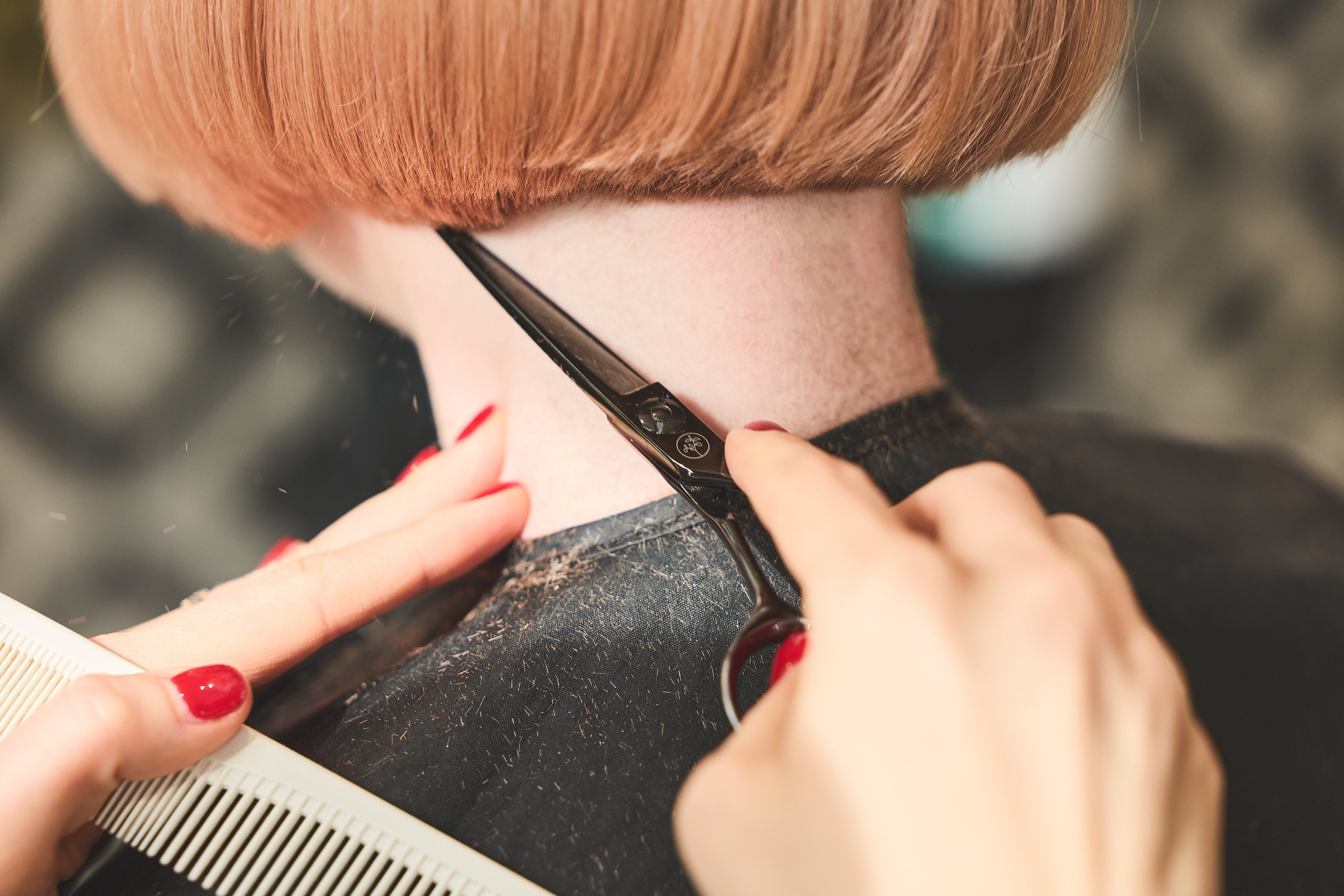
The right hairdressing scissors should feel like an extension of your hand: balanced, comfortable and precise from the first client to the last.
There is no single pair that is right for every hairdresser or barber. Your ideal choice depends on your hand, your cutting style, your workload and the techniques you perform most often. This guide breaks those decisions down clearly, so you can choose with confidence.
Start here
Four decisions will narrow your choice quickly
Think about comfort first, then match the blade and size to the work you do every day.
Choose your dominant hand
Use true left-handed scissors if you cut left-handed. Reversed blades improve visibility and control.
Match the blade length
Shorter blades favour detail work; longer blades suit scissor-over-comb and strong, clean sections.
Prioritise your grip
Offset and swivel handles can support a more natural wrist and thumb position through a busy day.
Choose for your technique
A precision cutter, texturiser and barber may each need a different blade or a complementary set.

Size and control
Choose a blade that follows your natural movement
Scissor size is measured from the tip of the blade to the end of the longest finger ring. Hand size is a useful starting point, but technique matters just as much. Your scissors should open and close without stretching your thumb or changing your wrist position.
Leaf tip: Do not choose size based on gender. Choose it for your hand, movement and the result you want to create.
A practical check
How to check scissor size against your hand
If you cannot try the scissors in person, use this as a starting point. It is a guide rather than a rule; experienced stylists often work with several sizes and choose between them according to the technique.
- Place the scissor or a ruler against your open palm.
- Position the tip at the end of your middle finger.
- Check where the finger rings sit in relation to the base of your thumb.
- Compare that measurement with the techniques you use most often.

Handle and ergonomics
Your grip should reduce effort, not create it
Offset handles
An offset handle places the thumb ring slightly forward, supporting a more open hand position. This can feel more natural during long cutting sessions and is the handle style used across much of the Leaf range.
Straight or opposing handles
On a straight handle, the finger and thumb rings sit more evenly. Some stylists prefer the traditional feel and control. Comfort is personal, so the best handle supports your technique without forcing your hand into an awkward position.
Swivel handles
A swivel thumb ring moves with your hand as you change cutting position. The Leaf Swivel Scissor offers greater freedom through the thumb and wrist in right-handed 5.5 and 6 inch sizes.
Correct blade orientation
Right-handed and left-handed hairdressing scissors
Left-handed hairdressers should use a true left-handed scissor wherever possible. A true left-handed design reverses the blades as well as the handle. This keeps the cutting line visible and lets the natural closing movement of the hand bring the blades together correctly.
Using a right-handed scissor in the left hand can encourage extra thumb pressure and make the cutting line harder to see. That can affect comfort, control and blade wear.
The Foundation, Pure Steel and Black Edition cutting scissors are available in right- and left-handed options. Leaf also offers left-handed texturising scissors and sets.
Cutting style
Match the tool to the finish you want
A clean cutting scissor builds the shape. A texturiser then controls weight, movement and softness without replacing the foundation cut.

Cutting scissors
Use for lines, graduation, layers, point cutting and scissor-over-comb. Blade length and handle comfort should reflect the techniques you repeat most.
Texturising scissors
Use to remove weight, soften edges and create movement. Tooth count and spacing influence how much hair is removed with each closure.
If you are building your first kit, begin with a reliable cutting scissor. Add a texturising scissor when you are ready to broaden your finishing and weight-removal techniques. Read our guide to choosing texturising scissors.
The Leaf range
Find your best starting point
Four distinct options, from an accessible first professional pair to specialist ergonomic performance.

Foundation Scissor
Made from 440C non-Japanese steel, with Leaf's ergonomic approach at a more accessible price for students, apprentices and professionals.
- Sizes5.5–7 inch
- HandsRight / left

Black Edition
Japanese 440C steel with a black titanium coating, broad size choice and an offset handle created for consistent professional use.
- Sizes5–7 inch
- HandsRight / left

Pure Steel Edition
An uncoated steel finish, balanced offset comfort and a broad size range for versatile salon or barber work.
- Sizes5.5–7 inch
- HandsRight / left

Swivel Scissor
VG10 steel and a rotating thumb ring for hairdressers who prioritise adaptable hand position and freedom of movement.
- Sizes5.5–6 inch
- HandRight
Build a coordinated kit
When should you choose a scissor set?
A set makes sense when you regularly move between building shape and refining the finish. It also keeps the feel and quality of your cutting and texturising tools consistent.
Pure Steel Duo
The Pure Steel cutting and texturising scissors together for versatile everyday work.
Explore the Pure Steel DuoComplete Black Edition Set
Black Edition cutting and texturising scissors with a professional razor.
Explore the Complete Black Edition Set
Made for the craft
Steel matters. Balance and finishing matter just as much.
Professional scissors are designed around repeated cutting, blade alignment and control. Material supports edge retention, but the experience in your hand also comes from blade geometry, tension, balance and careful finishing.
At Leaf, product decisions are informed by experience as hairdressers and salon owners. A scissor is not an ornament; it needs to perform through the pace and variety of professional work.
Protect your investment
Simple care keeps every cut feeling better
A few consistent habits protect the edge, tension and movement of your scissors.
Wipe away hair and product residue with a soft, dry cloth.
One small drop keeps the action smooth and helps move trapped debris.
Do not allow the blades to become loose or overly tight.
Use a secure case and never leave scissors loose on a trolley or in a bag.
Arrange professional servicing if the blades push, fold or pull the hair.
Leaf's professional scissor sharpening service includes dismantling, cleaning, hand sharpening, oiling and testing.
Frequently asked questions
Before you choose
What is the best hairdressing scissor size for beginners?
A 5.5 or 6 inch scissor is a useful starting point for many students and apprentices because it can support a broad range of cutting techniques. Your hand size and training style should guide the final choice.
Are 6 inch scissors suitable for salon and barber work?
Yes. A 6 inch scissor is a versatile size used across salon and barber work. For frequent scissor-over-comb cutting or larger sections, you may prefer a 6.5 or 7 inch blade.
Should a left-handed hairdresser buy left-handed scissors?
Yes. A true left-handed scissor reverses the blades, supports the natural closing action of the left hand and helps keep the cutting line visible.
Do I need both cutting and texturising scissors?
Start with a cutting scissor because it forms the foundation of your kit. Add a texturising scissor if your work regularly involves blending, softening lines, removing weight or creating movement.
How do I know when my scissors need sharpening?
Common signs include pushing or folding the hair, pulling through the section, a rough cutting action or a loss of control at the tips. Sharpening frequency depends on use and maintenance.
What is the difference between Foundation, Pure Steel and Black Edition?
Foundation is Leaf's most accessible professional option and uses 440C non-Japanese steel. Pure Steel offers an uncoated classic finish and broad everyday versatility. Black Edition uses premium 440C Japanese steel with a black titanium coating. All three offer ergonomic handles and right- and left-handed size choices.
Find the scissors that support your work
Compare sizes, handles and finishes across the full Leaf range.


